
How I Read 100 Books a Year
How do I read 100 books a year? Learn more about my routines, habits, and reading tools to read more than you ever thought possible.
For the last three years, I’ve read...a lot. Since making it a consistent part of my lifestyle in 2016, I’ve read 113 books in 2017, 86 in 2018, and 101 in 2019.
Total number of books can be misleading - some are quick manifestos under a hundred pages others over a thousand including one over 1,600 pages long - but my number of pages read has stayed consistently between 26,000 and 31,000 per year.
A little more math. Let’s take the low end of a year and call it 26,000 pages. Divided equally across an entire year that comes out to an average of nearly 70 pages a day. That sounds more than a little bit daunting, but let me explain a little more about my system and how it can help you.
Here’s another caveat. Many of these books are actually listened to as audio books. There’s fierce debate about this counting as “reading” a book. But since we’re not competing for any cash prizes, I couldn’t care less whether anyone else considers it “read”, but I do. In fact, I often feel like I take more from books that are listened to on my commute. I tend to listen to long biographies, history, and fiction books. For books I want to take a lot of notes from (industry, technical, or professional development), I prefer a Kindle version.
For details on my digital note taking and storing process, see this previous post. Shane Parish also outlines an interesting note taking technique here.
As to reading such a large number of books, I have a couple of tips that I think can help anyone read more than they are now. We all say we want to read more, and I believe everyone can benefit from it. I also believe anyone can read substantially more with just a few tweaks to your routine.
Find the Medium That Works for You
The great thing about today’s landscape is that there are so many ways to ‘read’ nowadays. From traditional printed books, to e-readers, to smartphone apps, to high quality audio books that can be downloaded at the drop of a hat.
I’ve found that I read substantially faster on Kindle (and remember Kindle books can be read via apps on practically any smartphone, tablet, or in a web view). I believe this is because the Kindle app now allows vertical scrolling instead of page flipping. Kindle books are also often deeply discounted. I keep a running list of books recommended to me as an Amazon Wish List and sort by price every day to see which books have dropped down to a buck or too.
There are also great services like Scribd, which is essentially an unlimited, Netflix-style site for e-books, audio books, documents and magazines. Use this personal link of mine to try it out for two months free of charge.
And don’t overlook the old-fashioned Library. Many library systems also include free digital resources (check out Libby) as well as checkout privileges for regular books. There are also many free sites to get digital books as PDFs or formatted for Kindle - Standard EBooks, the Gutenberg Project, Springer, and Open Culture are among those I’ve used.
Figure out what works best for you and dive in.
Schedule Your Reading
To read substantially more than you currently do, you have to make it part of a regular habit. It can’t just be when you feel you “have time” - how often does that happen anyway?
For me, I read a bit every night in bed before going to sleep. We don’t keep a television in the bedroom and this is my unwinding routine. I’ll often be surprised at how often I end up reading an hour or more.
I also read after my shower each morning. This is typically not a very long session but one I almost always do. What times can you make this part of your habit? Is it during your lunch hour? Your commute? Your workout? We all have rituals, find a way to get reading into yours.
Steal Reading Time
In order to super-charge your reading time, shift time spent on your phone to time reading. I feel much better when I use my iPhone to quickly read through some content on Kindle, Blinkist, or Pocket, than scrolling through social media or playing a mindless game.
Use these little pockets of 3-5 minutes to knock out a few pages of an e-book. They’ll add up.
Make it Social
Reading, like most things, can be even more fun when it’s social. I use the social media site Goodreads to track my reading, read reviews, and follow along with friends. I’ve also tried to share my books on social media and strike up conversations with other people. Both these also lead to great recommendations.
Or even go back to analog. Find a book that you and a friend can read simultaneously. Suggest a reading group or book club to your co-workers. I bet you’ll get more out of the reads and keep on top of the habit when you have accountability.
Learn How to Quit
I’ll be the first to admit, this is not a strength of mine. I have trouble not finishing a book that I start. I’ve slogged through more than my share of books that didn’t hold my interest or weren’t as valuable as hoped for. I’m trying to do better with this - I’ve started to realize even at a 100/year clip I’m never going to read everything I’d want to. Sometimes bailing on something is for the best.
I’ve actually made it a goal to read more Blinks (book summaries from a great service called Blinkist) and book summaries to retain key information from non-fiction books. An unfortunate side effect of the publishing industry is that many of these books could be 50 pages long and provide the same level of value, but to be published they must be 250 pages.
Bottom line, don’t let a goal of reading X number of books per year get in the way of the true goal, which is learning and retaining what you’ve read.
In conclusion, reading a hundred books each year might not be realistic for your lifestyle. But I guarantee you that however busy you are, you can read substantially more than you do today. From Bill Gates’ secluded “Think Weeks” to Warren Buffett’s estimation that he spends 80% of his time reading and thinking deeply, some of our society’s greatest thinkers reserve time to read and reflect.
How to Read 80(ish) Books a Year (And Actually Remember Them), GQ
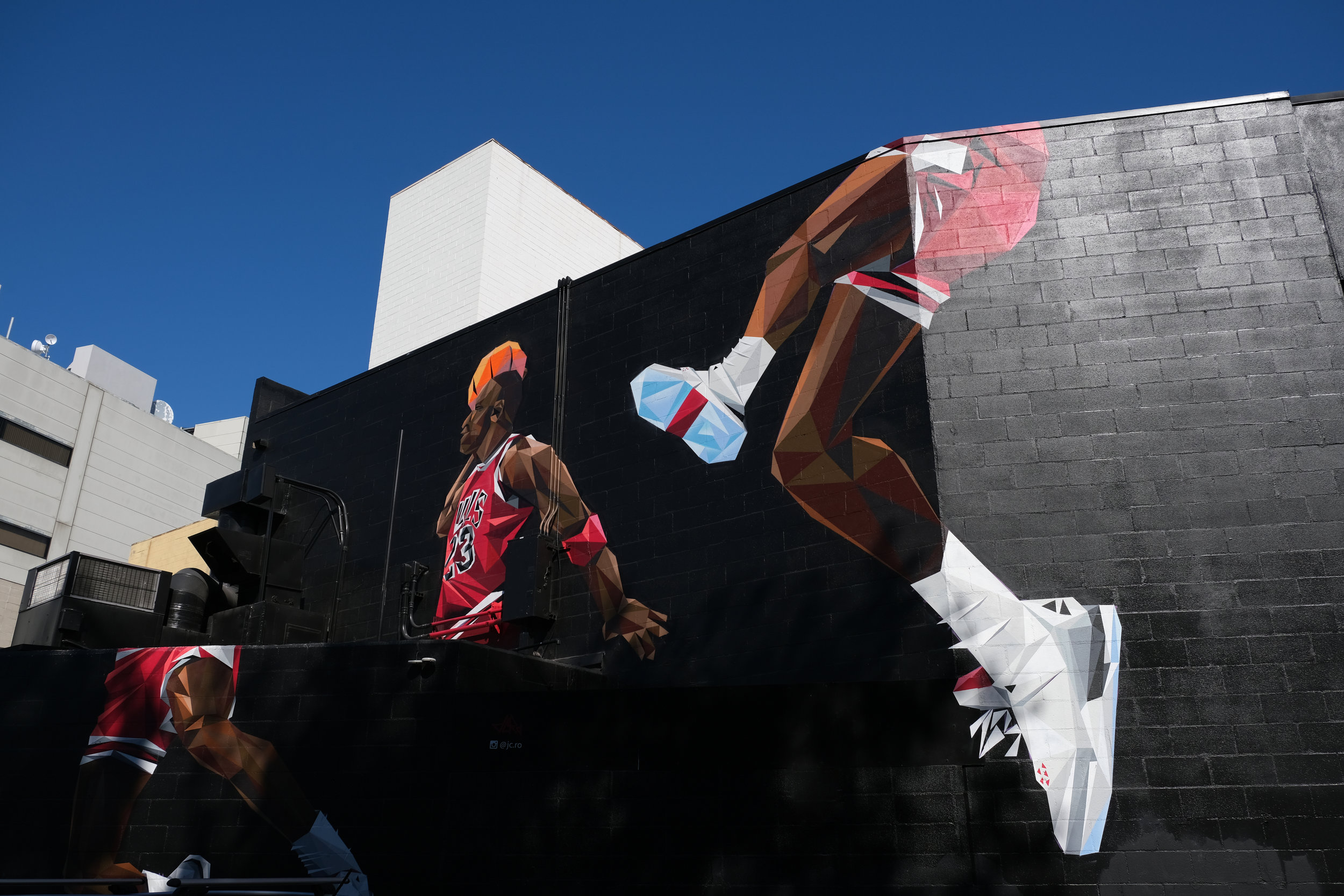
The Sports Leadership Podcast Breaks Down The Last Dance
For basketball junkies who grew up in the 90’s, ESPN’s “The Last Dance” was must-see television (especially with no live sports during the pandemic). The 10-part series coming soon to Netflix chronicled Michael Jordan’s legendary career using his final season in Chicago as a backdrop.
For basketball junkies who grew up in the 90’s, ESPN’s “The Last Dance” was must-see television (especially with no live sports during the pandemic). The 10-part series coming soon to Netflix chronicled Michael Jordan’s legendary career using his final season in Chicago as a backdrop.
Through amazing amounts of behind-the-scenes videos and extensive interviews with those around Jordan we see an up close look at his personality and competitive nature. In Episodes 41 and 42 (we couldn’t stop talking about it, so broke it up), Kevin and I break down the key leadership lessons from Jordan, Phil Jackson, and the ‘98 Bulls. We discuss the differences between Jordan’s day and the modern NBA, debate his style of leadership, and discuss some overlooked stars of the show.
Jordan is nothing if not complex, and there’s plenty to learn from his story. Hope you enjoy!
Part 1
Part 2

Texas A&M Deputy AD Kristen Brown Joins The Sports Leadership Podcast for Episode 40
Texas A&M Deputy AD for Student-Athlete Experience joins Mark and Kevin on Episode 40 of The Sports Leadership Podcast to talk about her career journey, leading through change, giving student-athletes the tools to succeed and how our industry is doing in regards to diversity.
Texas A&M Deputy AD for Student-Athlete Experience joins Mark and Kevin on Episode 40 of The Sports Leadership Podcast to talk about her career journey, leading through change, giving student-athletes the tools to succeed and how our industry is doing in regards to diversity.
I had the good fortune of working with KB at the conference office, it’s exciting to see the big things she’s doing.
If you have not yet, please subscribe to the Sports Leadership Podcast on iTunes, Spotify, Stitcher, SoundCloud or Google Play.

Keep Chopping Wood - Talking Kevin's New Book on Episode 39 of the Sports Leadership Podcast
This week, Sports Leadership Podcast co-host Kevin DeShazo releases his fantastic new book, Keep Chopping Wood.
We dive into the book in Episode 38 and discuss everything from the genesis of the book, its writing and publishing, and the initial feedback he’s received.
This week, Sports Leadership Podcast co-host Kevin DeShazo releases his fantastic new book, Keep Chopping Wood.
We dive into the book in Episode 38 and discuss everything from the genesis of the book, its writing and publishing, and the initial feedback he’s received. It all started with this Tweet in January, which resonated more than Kevin could have imagined.
The book chronicles a young athlete, who learns an important message from his grandfather that proves to be "An ordinary approach to achieving extraordinary success".
You don’t chop wood because you need it today. You chop it today so you have it when you need a fire tomorrow.
— Kevin DeShazo (@KevinDeShazo) January 12, 2020
Your team will face adversity. Do the work today to build relational trust and culture so when adversity hits, you can overcome.
Make sure you have wood for the fire.
The book can be found on Amazon, or by visiting www.KeepChoppingWood.com
If you have not yet, please subscribe to the Sports Leadership Podcast on iTunes, Spotify, Stitcher, SoundCloud or Google Play.

Episode 38 of The Sports Leadership Podcast Is a Conversation with Fellow Podcast Host Jake Hirshman
In Episode 38, we meet up with fellow podcast host Jake Hirshman, who talks to us about networking, learning from his podcast guests, and why he avoids social media.
This was a conversation both Kevin and I really enjoyed. I had met Jake Hirshman when I appeared on his great podcast, Life in the Front Office to talk about my career journey. His day job is with the PGA Tour’s Korn Ferry Tour and is also an author, teacher, and overall interesting guy.
Links to Items Mentioned in the show:
Life in the Front Office Podcast
“20 Secrets for NCAA Student Athletes That Won’t Go Pro” can be found on Amazon.
If you have not yet, please subscribe to the Sports Leadership Podcast on iTunes, Spotify, Stitcher, SoundCloud or Google Play.

Lessons from Jim Host's New Book, "Changing the Game"
Jim Host’s new book, “Changing the Game” is required reading for those interested in the business of college sports. As someone who considers Mr. Host a mentor, I wanted to share some of the biggest takeaways from his amazing story.
Earlier this year, Jim Host, founder of Host Communications and one of the pioneers of college sports marketing released his autobiography “Changing the Game”. An absolute must-read for anyone with an interest in the business of college sports, the book has many lessons everyone can learn from.
Host is known perhaps most for his founding of Host Communications, the company that sold multimedia rights from college conferences and schools - a precursor to companies like Learfield IMG College today. But his story is about so much more, as he found success in seemingly unrelated fields such as state government in his home state of Kentucky.
I had the fortune to meet Mr. Host at the outset of my career, and was told many of these key pieces of advice first hand nearly 15 years ago. I’m thrilled that these lessons are now available for everyone else, and I have attempted to distill some of the key points here.
Take Something From Everywhere You Go
Host had a career full of different occupations - radio announcer, salesman, political aide, and more before he launched Host Communications. He got his start as the first scholarship baseball player at the University of Kentucky after turning down a professional offer in large part because of his parent’s insistence he get an education.
A minor league career as a pitcher eventually materialized, but an injury cut his baseball career short. Soon after he became a radio announcer and eventually a salesman at Proctor & Gamble. Yet, he took valuable lessons from all his stops that helped him down the road. These disparate experiences created a tapestry for his unique and trailblazing career.
In his own words:
“The end of my baseball career taught me how to deal with adversity. My time at WVLK showed me that I was pretty good at broadcasting, but I had a natural gift for sales and working with people. While at P&G, I learned some of the most effective methods of running a company.”
Take the Long View
It’s hard to imagine a world where the NCAA existed without sponsors, the SEC was underfunded compared to other conferences and the University of Texas was not raking in revenue, but this was the college landscape Host entered.
Host saw the ability for the NCAA to make significant revenue from its marquee men’s basketball tournament and helped usher in the era of corporate partners. Initially focused on radio, Host Communications (HCI) saw the landscape changing after the Regents decision and emergence of ESPN, and realized the future was on television. He pivoted his work to campus and expanding the inventory of sellable content to drive revenue to athletics departments.
Monitoring the landscape and being willing to adjust course for new opportunities are critical to success.
In his own words:
“Our company’s success with a few select schools in the mid-1980s created a foundation for rapid growth in the late 1980s and 1990s. That expansion stemmed from two clear factors. First, the company genuinely helped the schools it served. Second, my connections with athletic directors and sports information directors around the country continued to grow.”
Invest In Relationships
This is probably the biggest lesson and one Host comes back to repeatedly. At every point of his career he made it a point to develop relationships with those he worked with. He developed relationships with Sports Information Directors in his earliest days working in radio and NCAA tournament program sales. He worked with Athletics Directors when he established the SWC radio network and made a point to deliver each their annual royalty check. A simple but significant gesture that let them know he was a partner in their success.
As the landscape would change, understanding the shifting sands would be of little use if these relationships had not been carefully cultivated for years.
In his own words:
“I believed the key to sales was making clients buy into me as a person first. If they liked me, I had a chance.”
“What I have shared in this epilogue highlights one thing I have learned in my more than eighty years: the one constant in life is change. Everything changes. If we realize that, we will also see that amid all the change, the other constant is the need to develop and maintain relationships for a fulfilling life. Whether examining the past or looking to the future, the most important resource we all have, which also provides the greatest source of strength and joy, is other people.”
“With this broad view in mind, HCI’s allegiance remained with the individual institutions it served. I always worked closely with ADs, but I learned that if I could develop a relationship with a university’s president, our partnership was far more likely to be successful.”
Cooperation is Critical
When I met Mr. Host shortly after graduating college, I remember him telling me these words verbatim. Most dealings in business are not cut and dried, and even if they are it’s not a given that both sides will agree. Host says that when there is a clear right or wrong, hold strong, but if both sides of a disagreement have legitimate points, give the other guy the point.
This is a way to show and gain trust. It also brings in (though not specifically articulated by Host) the principle of reciprocity. If you provide someone something of value, they have a natural tendency to want to pay it back. That can only help in the long term relationships Host knows are so critical to long-lasting success.
Host also had government posts in state government and learned the value of working with and understanding people who you don’t agree with. Don’t take criticism personally, and understand that good people can disagree. He cites a group of his own friends who disagree on politics but value each other’s friendship and expertise.
In his own words:
“I have always said that when one is presented with a clear choice between right and wrong, choose the right. When an issue is gray, look at it from all perspectives. Give people the benefit of the doubt, and then give them the credit. This will promote unity and cooperation rather than division.”
“Another life lesson I learned in politics is that when it comes to criticism and personal attacks, it is simply wiser to keep your mouth shut and go about your work. Since many good people feel differently about specific political issues, it is important to keep an open mind and learn that it is possible to disagree without being disagreeable.”
Character Counts
Understanding of other people’s shortcomings and acceptance of differences do have a sharp stopping point - dishonesty and poor character. This was something Host was not willing to compromise on and is a good lesson to all. He recognized legitimate differences and was willing to work towards a shared successful outcome, but that does not mean compromising on ethics.
In his own words:
“The lesson I have learned is that everyone has good in them, and it has been my desire to find that good and help people reach their full potential. A successful path to a prosperous future includes finding the good in people and rewarding it. A healthy culture must not tolerate dishonesty, laziness, or theft.”
Seek Creative Solutions to Tough Problems
Examples abound of Host’s ability to creatively frame problems to get successful results. For example, when building out the arena and adjacent convention center that would eventually become Rupp Arena, Host insisted that architects team up with development and construction companies for one master bid. In the past, piecing together individual bids led to missed deadlines and cost overages.
While some contractors resisted this model of ‘consortiums’, they ended up finding a good bid featuring a local architectural firm. That and the lessened chance of cost adjustments was critical for local support of the project.
Don’t Fear or Downplay Failure
Host’s career - like all of ours - was not without failures. He tells the stories of business deals with Bray Cary and USA going disastrously wrong. The important thing is to survive - and learn.
In his own words:
“I took satisfaction in knowing that in both the Bray Cary situation and the USA debacle, we managed to keep our company safe and strong—protecting people’s jobs and our integrity. Difficult experiences are life’s best teachers, and I learned a great deal. This episode affirmed the importance of hard work, the value of telling the truth, and the fact that decisions, good and bad, have an impact beyond yourself.”
Learn to Adapt
Host’s business dealings with the NCAA and college athletics departments began before the era of aggressive marketing and the power of TV revenue. He was able to move his company’s model from one based on radio at the NCAA level to more school-focused partnerships that needed radio networks. Eventually that focus changed as well to match what was needed in the market.
In the epilogue, Host urges the NCAA to adapt as well. Published before the NCAA’s recent announcement that they are working towards allowing student-athlete the ability to monetize their name, image, and likeness, Host urges the NCAA to spend less time fighting to preserve the current system and reframe the focus to the organization’s stated mission.
In his own words:
“It is my hope that coaches, athletic directors, conferences, and NCAA presidents will spend less energy trying to preserve the status quo and make it their mission to keep talented athletes (in all sports) in college until they graduate. That is, after all, the goal of higher education across the country.”
These lessons are just a few that you can take from Host’s legendary career and wonderful new book. Pick it up on Amazon here or visit JimHostBook.com for more information or to buy a physical copy.

Blake Lawrence Talks NCAA NIL Developments and Building a Business on the Sports Leadership Podcast
Opendorse co-founder and CEO Blake Lawrence joins Kevin DeShazo (Culture Wins, Fieldhouse Media) and Mark Hodgkin (TicketSocket) to discuss a number of topics.
On Episode 37 of The Sports Leadership Podcast we were joined by Blake Lawrence, Co-Founder and CEO of Opendorse. Opendorse is a social media publishing tool used by more than 10,000 athletes and leaders in sports.
With the NCAA’s recent announcement that they will move forward with a plan allowing student-athlete compensation for endorsements and promotions, the conversation was very timely.
Blake shares thoughts on what the announcement will mean to the future of college sports. He makes the point that monetization of NIL is not new, just new for the college market. He shares some great recommendations on what leaders in the college space should be focusing on now.
We also dive into the rise of Instagram founded by Blake and his Nebraska teammate shortly after they left school. We also discuss the unique benefits student-athletes bring to the professional world and how Blake has established an authentic brand on social media.
If you have not yet, please subscribe to the Sports Leadership Podcast on iTunes, Spotify, Stitcher, SoundCloud or Google Play.

Bryan Bedford Chats Tech, Venues, and Remote Leadership in Episode 36 of The Sports Leadership Podcast
Mark Hodgkin and Kevin DeShazo chat with Cisco Executive Bryan Bedford in Episode 36 of The Sports Leadership Podcast.
Kevin and I had the pleasure of talking to Cisco Executive and old friend Bryan Bedford in Episode 36 of the Sports Leadership Podcast. We got into the tech landscape and modern sports and entertainment venues as well as some tips on leading remote teams.
Bryan has “worked from home” since before we all were and has some great insight on what it takes to be successful. One, don’t be afraid to show personality and make it fun. He talks about a recent “scavenger hunt” he did with his team that brought fun and positivity to the group in a challenging time.
Second, it’s important to communicate. His organization is having weekly calls with their entire 70,000 personal global workforce. Now more than ever, it’s important to share information and communicate clearly. And third, leverage the collaboration tools you have, even if that’s just good old fashioned text messages.
We also dive into what sports will look like when they come back. It’s a great conversation and hope you enjoy it!
And for those of you wondering what my plant-heavy background looks like, here it is! My wife keeps our house very vibrant and beautiful with her green thumb.

Who needs a custom Zoom background?
If you have not yet, please subscribe to the Sports Leadership Podcast on iTunes, Spotify, Stitcher, SoundCloud or Google Play.